
Perfect solution partner
for cleaner voyages.
Leading the way in maritime decarbonization. We transform complex emission data into actionable strategies, ensuring your fleet remains compliant with IMO-DCS & EU-MRV while maximizing operational efficiency.
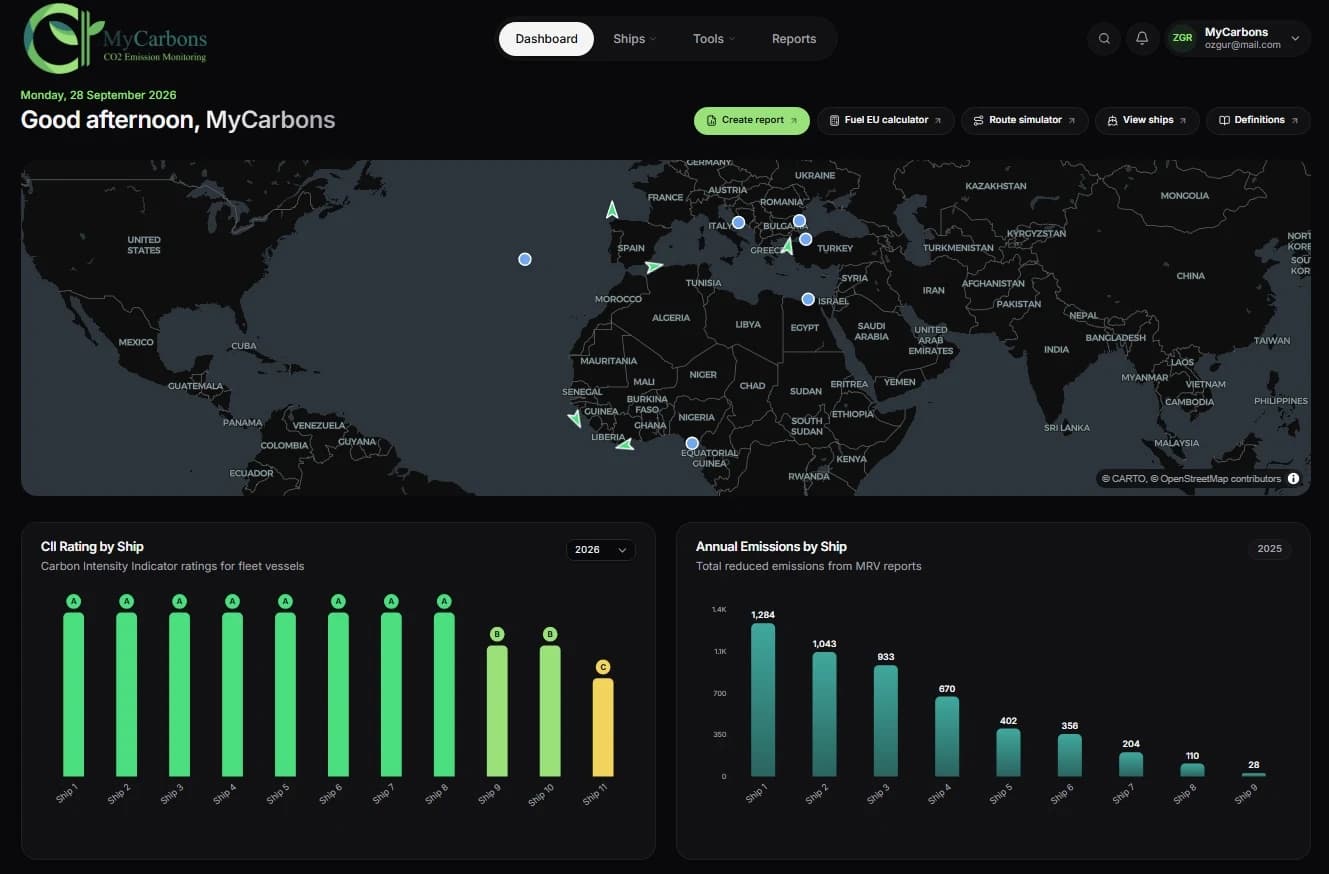
Every vessel on one live world map, shared by operations and compliance.
Fuel, CO₂eq and EUA allowances broken down voyage by voyage and port stay.
Attained vs required CII for every ship, tracked year by year.
GHG intensity against the target, with the penalty or surplus forecast upfront.
Annual EU and UK MRV emissions, compared across the fleet.
Forecast FuelEU and EU / UK ETS exposure for a route before it sails.
We transform complex emission data into actionable strategies, ensuring your fleet remains compliant while maximizing operational efficiency.
How can MyCarbons assist you?
Collect and control the data, create the perfect emission reports, optimize the results & much more.
Cloud Based Application
No installation required. We collect necessary data through daily reports sent by ships. A seamless experience for both ships and customers without any software installation.
- Collect ship data
- Control every report
- Correct inconsistencies
- Deliver accurate emission reports
Complete Service
More than just a tool - we provide a complete service. We control, collect, and correct all ship data, ensuring accurate emission reports.
Data Optimization
Advanced voyage performance monitoring. Calculate CO2 emissions in full compliance with IMO, EMSA, and UK regulations with precision and reliability.
Is your company fully compliant with every regulation on ship energy efficiency?
Measures how efficiently a ship of 5,000 GT and above carries cargo or passengers, as grams of CO₂ per capacity and nautical mile, rated A to E every year. Managed under the SEEMP Part III plan.
The EU's legislative bodies have adopted a revision of the EU ETS directive to include shipping from 2024. This entails a three-year phase-in period, increasing in scope from 40% of emissions in 2024 to 70% in 2025 and 100% in 2026.
How can a ship reduce its CO2 emissions?
- 01
Slow steaming
Operating ships at lower speeds can significantly reduce fuel consumption and CO2 emissions. Slowing down by a few knots can result in significant fuel savings.
- 02
Energy efficiency improvements
Optimizing the hull design, using advanced propulsion systems, employing waste heat recovery systems, and utilizing energy-efficient technologies throughout the vessel.
- 03
Alternative fuels
Shifting from traditional fossil fuels, such as heavy fuel oil, to cleaner alternatives like liquefied natural gas (LNG), biofuels, and hydrogen-based fuels.
- 04
Air lubrication systems
Tiny air bubbles released along the hull create a thin layer of air that reduces friction between the hull and seawater, improving fuel efficiency.
- 05
Improved maintenance and hull cleaning
Regular maintenance and cleaning of ship hulls can help prevent biofouling, which can increase fuel consumption.
- 06
Efficient route planning
Optimizing voyage planning can help ships take advantage of favorable currents and weather conditions, reducing travel time and fuel consumption.
- 07
Shore power and onshore power supply
Connecting to the local power grid when berthed at ports instead of using onboard generators, reducing the use of fossil fuels.
- 08
Emission control technologies
Scrubbers and selective catalytic reduction (SCR) systems cut SOx, NOx and particulate matter. They do not lower CO2 on their own, but belong in the same compliance plan.
- 09
Efficient cargo handling
Optimizing cargo loading and unloading processes. Streamlining operations and minimizing idle time can enhance overall efficiency.
- 10
Research and development
Continued investment in research and development is crucial to drive innovation and find new ways to reduce CO2 emissions from ships.
Fuel EU Calculator
Estimate the FuelEU penalty or compliance surplus of your fuel consumption based on type, amount, and year.
Detailed calculations, voyage mode, ice class and more come with the full version. Get in touch and we'll set it up for your fleet.
Contact us for the full version- COMPLIANCE BALANCE
- —
- GHG TARGET
- —
- GHG ACTUAL
- —
Pick a fuel and enter its tonnage. The result updates automatically.
All values and calculations are based on the following regulations and the official EMSA web page.
Results are estimates for information only and do not replace a verified FuelEU report. See our Terms of Use.
If you need any details or information about Fuel EU Maritime Regulation, please contact My Carbons by email info@mycarbons.com
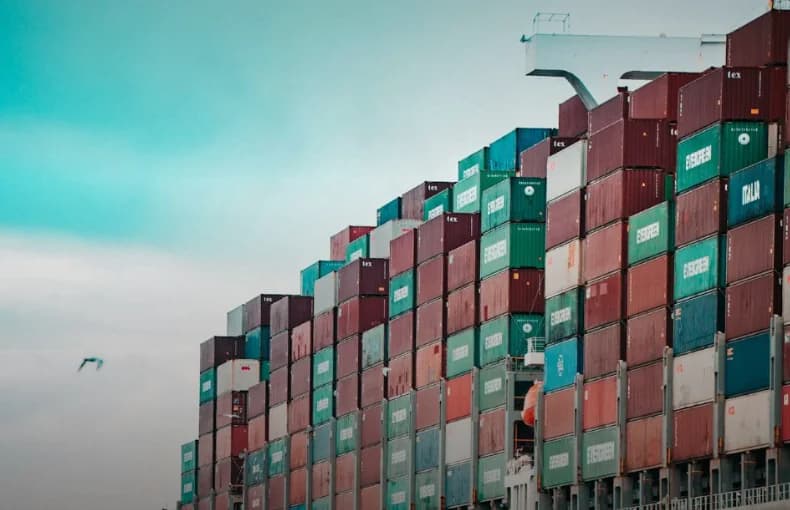
Solution for CO2 reducing regulations
We offer a full service: data collection, control, optimization, reporting, preparing plans and assessing certificates.
Talk to our teamContact Us
If you need any details or information about Fuel EU Maritime Regulation, please contact My Carbons.
The map is provided by Google. Loading it lets Google set cookies and receive your IP address on servers abroad (including the USA), which may not offer the same level of protection as Türkiye.